Harriet had three browser tabs open on her laptop in Leeds, and each one showed a different price for what looked like the same trip. One site promised Delhi, Agra and Jaipur for USD 299. Another wanted USD 2,400 for five days. The third simply said "price on request", which annoyed her more than either. She and her husband Tom had a week of leave in February and one firm rule: their own car, their own guide and no shopping stops.
So she did what most sensible travellers end up doing. She stopped comparing headline prices and started asking what each price actually contained. Which hotels? Which car? Was the guide a licensed one or the driver's cousin? Were the Taj Mahal tickets included, and did they cover the inner mausoleum? What happened if the trip landed on a Friday, the day the Taj stays shut?
That is exactly the gap this guide fills. Below you will find realistic per-person prices for a private Golden Triangle tour of four to seven days at every hotel level, from comfortable 3-star properties to the palace hotels people dream about. You will see what a car and driver cost per day, what a licensed guide charges in each city, and what every major monument charges a foreign visitor at the gate. We also cover the add-ons travellers love most, Ranthambore tigers and the evening river ceremony in Varanasi, along with the seasons when prices climb and the simple deposit steps that lock in a booking. Every figure is quoted in Indian rupees with a US dollar equivalent at roughly INR 84 to the dollar, and every figure leans to the higher, realistic side for a private trip, so there are no nasty surprises when the final quote lands in your inbox.
The single biggest driver of your Golden Triangle package price is the hotel category, followed by the number of nights. The car, guide and driver costs barely change between a 3-star and a palace trip, but the room rate can multiply by eight. All prices below are per person on twin share for a private trip with an air-conditioned car, English-speaking driver, licensed local guides, daily breakfast, airport pickup and drop, fuel, tolls and state taxes. Monument tickets and lunches are usually extra, and we price those separately later.
A 4-day Golden Triangle tour with three nights (one each in Delhi, Agra and Jaipur) is the shortest route that works, though it is tight. At 3-star level, think Hotel Godwin Deluxe in Delhi or Howard Plaza in Agra, expect around INR 34,000 (USD 405) per person. With 4-star hotels such as the Radisson or Four Points by Sheraton category, the figure rises to about INR 46,000 (USD 548). A 5-star Golden Triangle tour using the Taj, ITC or Trident brands lands near INR 74,000 (USD 881), and a palace-level stay at The Oberoi New Delhi, The Oberoi Amarvilas and Rambagh Palace runs to roughly INR 165,000 (USD 1,964) per person.
The 5-day Golden Triangle itinerary with four nights is the version most travellers book, because it gives Delhi a full day and stops the Agra visit from feeling rushed. Budget roughly INR 42,000 (USD 500) at 3-star, INR 58,000 (USD 690) at 4-star, INR 92,000 (USD 1,095) at 5-star and INR 210,000 (USD 2,500) at palace level per person.
Stretch to six days and five nights and you can add Fatehpur Sikri properly, a slower Jaipur day and perhaps a cooking class or a stepwell stop at Abhaneri. Prices climb to around INR 50,000 (USD 595) at 3-star, INR 69,000 (USD 821) at 4-star, INR 110,000 (USD 1,310) at 5-star and INR 250,000 (USD 2,976) at palace level.
A 7-day Golden Triangle tour with six nights is the relaxed choice, often with two nights in Jaipur and two in Delhi, and it suits first-timers, families and older travellers who dislike early starts. Expect about INR 58,000 (USD 690) at 3-star, INR 80,000 (USD 952) at 4-star, INR 128,000 (USD 1,524) at 5-star and INR 290,000 (USD 3,452) per person at the luxury palace hotel level, where a single night at Amarvilas with a Taj view can cost INR 70,000 (USD 833) or more for the room alone.
Solo travellers pay a single supplement, typically 60 to 80 percent of the twin-share rate, because the car and guide are not shared. Groups of four or more pay less per head, since one Innova Crysta and one guide are split across more people. A family of four on the five-day 4-star version will often see the per-person price fall to around INR 46,000 (USD 548).
Discover Private Golden Triangle Tours at the Right Price
Enjoy Delhi, Agra and Jaipur with private transport, experienced drivers and carefully selected accommodation. Get a personalised itinerary that balances comfort, experiences and your travel budget.
Around a quarter of your bill goes on the road, so it helps to know what a private car and driver in India really costs. The standard Golden Triangle loop runs Delhi to Agra (about 230 km, three to four hours on the Yamuna Expressway), Agra to Jaipur (about 240 km, four to five hours with a Fatehpur Sikri stop) and Jaipur back to Delhi (about 280 km, five to six hours). Add city sightseeing and airport runs and the total comes to roughly 850 km over five days.
For one or two travellers, the Maruti Swift Dzire or a Toyota Etios is the sensible choice. A Swift Dzire with driver costs around INR 3,500 to 4,000 (USD 42 to 48) per day on an outstation basis, which usually covers up to 250 km a day, fuel, tolls, interstate permits, parking and the driver's food and overnight allowance. Luggage space is the limit here: two large suitcases and two cabin bags are about the maximum.
Most couples who want comfort, and every group of three or four, should take a Toyota Innova Crysta. It has captain seats, real legroom and space for four large suitcases. Expect INR 5,000 to 6,000 (USD 60 to 71) per day. For five to nine travellers, a Tempo Traveller with driver runs about INR 7,500 to 9,000 (USD 89 to 107) per day, and the newer luxury versions with pushback seats sit at the top of that band. Very large groups move to a 45-seater Volvo coach at INR 18,000 to 22,000 (USD 214 to 262) per day.
Drivers on private trips are not guides. Rules restrict them from guiding inside monuments, and a good one will simply drop you at the gate and wait. That is where the licensed tour guide fee comes in. Government-approved guides, trained and certified by the Ministry of Tourism or the state tourism department, charge around INR 2,500 to 3,000 (USD 30 to 36) for a half day of up to four hours and INR 3,500 to 4,500 (USD 42 to 54) for a full day, for a party of up to four. In Agra, the Taj Mahal and Agra Fort combined usually count as a full day. Groups of five to fifteen pay roughly INR 5,000 to 6,500 (USD 60 to 77) per day.
If you want a guide who speaks Spanish, French, German, Italian or Japanese, budget a premium of about 20 to 40 percent, and book early, because there are only a handful in each city during peak season. A typical five-day trip needs four guide sessions: a full day in Delhi, a full day in Agra, a half day at Fatehpur Sikri and a full day in Jaipur. On a private package these fees are normally built in, so the line item is invisible, but it accounts for roughly INR 13,000 to 16,000 (USD 155 to 190) of the total for a couple.
Tipping is not included anywhere. A fair figure is INR 500 to 800 (USD 6 to 10) per day for the driver and INR 500 to 1,000 (USD 6 to 12) per session for each guide, given at the end of their service.
Foreign visitors pay a separate, higher rate at every protected monument, and these Golden Triangle monument tickets are almost always excluded from package prices because they are paid at the gate or online on the day. Here is what a foreign passport holder pays, verified against the official Taj Mahal and Archaeological Survey of India websites.
The Taj Mahal ticket price for foreigners is INR 1,100 (USD 13) for entry to the gardens, the mosque and the main platform. Entry into the inner mausoleum, where the cenotaphs of Shah Jahan and Mumtaz Mahal sit, costs an additional INR 200 (USD 2.40), so most visitors pay INR 1,300 (USD 15.50) in total. The ticket includes a shoe cover and a small bottle of water, and buying online saves queueing at the window. Children under 15 go free.
Taj Mahal timings follow the sun. The ticket windows open one hour before sunrise and close 45 minutes before sunset, and the gates themselves open about 30 minutes before sunrise. The monument is closed every Friday for prayers, which is the most common scheduling mistake people make. A good itinerary simply places Agra on any other day, or puts the Taj on Thursday evening and Agra Fort on Friday morning. Night viewing is possible on the full moon night and two nights either side, except Fridays and the month of Ramadan, for INR 750 (USD 9) per foreign adult in small half-hour batches booked a day ahead at the Archaeological Survey office on the Mall Road in Agra.
Agra Fort costs INR 650 (USD 7.70), or INR 600 if bought on the same day as your Taj ticket. Fatehpur Sikri, the abandoned red sandstone capital 40 km west of Agra on the Jaipur road, costs INR 610 (USD 7.30). The smaller Itimad-ud-Daulah tomb, often called the Baby Taj, costs INR 310 (USD 3.70) and is well worth an hour.
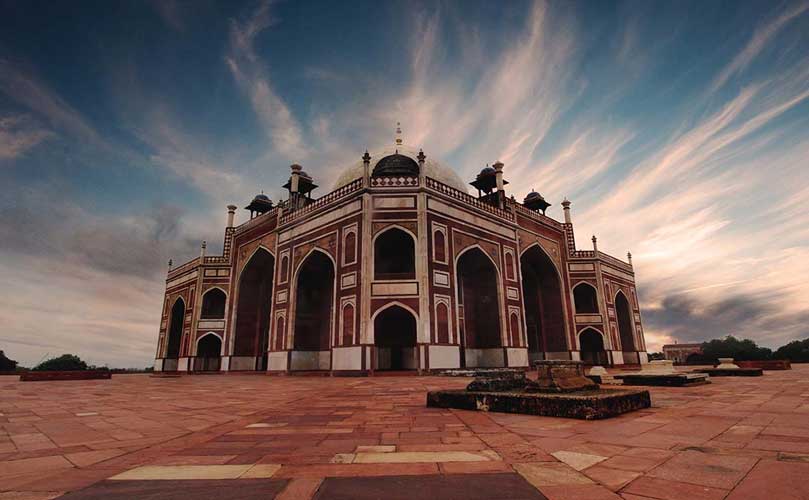
In Delhi, the Red Fort entry fee is INR 600 (USD 7.10) in cash or INR 550 online, and the fort is closed on Mondays. Qutub Minar and Humayun's Tomb carry the same INR 550 online or INR 600 cash rate. Jama Masjid has no ticket, though there is a camera fee, and Gandhi Smriti and the Mahatma Gandhi cremation memorial are free.
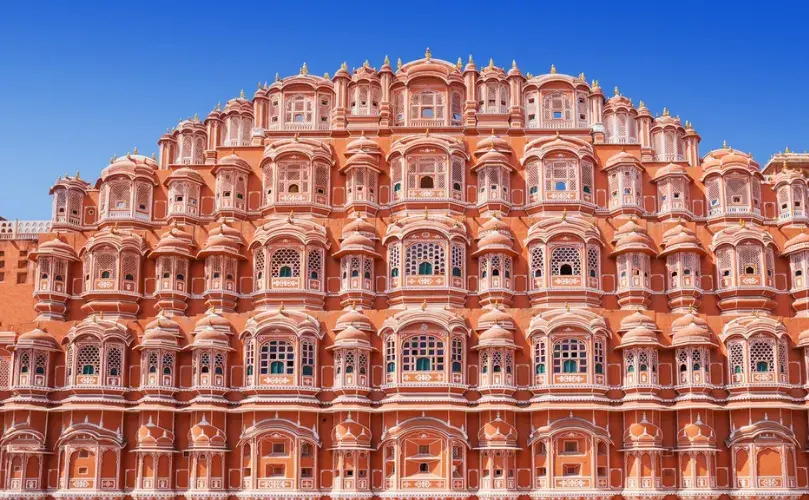
Rajasthan revised its rates upwards recently. Amber Fort ticket for foreigners now costs INR 500 (USD 6), while Hawa Mahal, Jantar Mantar and Nahargarh Fort each cost INR 300 (USD 3.60). The best value is the Jaipur composite ticket at INR 1,000 (USD 12), valid for two days and covering Amber Fort, Hawa Mahal, Jantar Mantar, Albert Hall Museum and Nahargarh. The City Palace is privately run by the former royal family and sold separately, at about INR 700 to 1,000 (USD 8 to 12) for the general ticket, with pricier options for the private apartments.
Add it all up and a foreign visitor doing the classic sights pays roughly INR 5,000 to 5,500 (USD 60 to 65) in entrance fees across the whole loop. Camera fees are now rare, but drone use is banned at all of these sites.
Experience More India with a Smarter Travel Budget
Make every travel expense count with a thoughtfully planned private holiday. Combine comfortable hotels, local guides and convenient transfers across India's iconic Golden Triangle destinations.
Many travellers turn the classic loop into something longer, and the two most requested extensions are tigers and the Ganges. A Golden Triangle tour with Ranthambore adds two nights at Sawai Madhopur, about three and a half hours by road from Jaipur or a shorter ride on a morning train. Ranthambore National Park runs morning and afternoon safaris in either a six-seater jeep (the Gypsy) or a twenty-seater open bus (the Canter). A seat in a shared jeep costs a foreign visitor roughly INR 2,500 to 3,000 (USD 30 to 36) per drive including permit and guide, while a whole private jeep runs to about INR 16,000 to 18,000 (USD 190 to 215) per drive. Two safaris and two nights at a 4-star lodge add around INR 38,000 (USD 452) per person, rising to INR 120,000 (USD 1,429) or more at Sujan Sher Bagh or Aman-i-Khas. The park's core zones close from July to September.
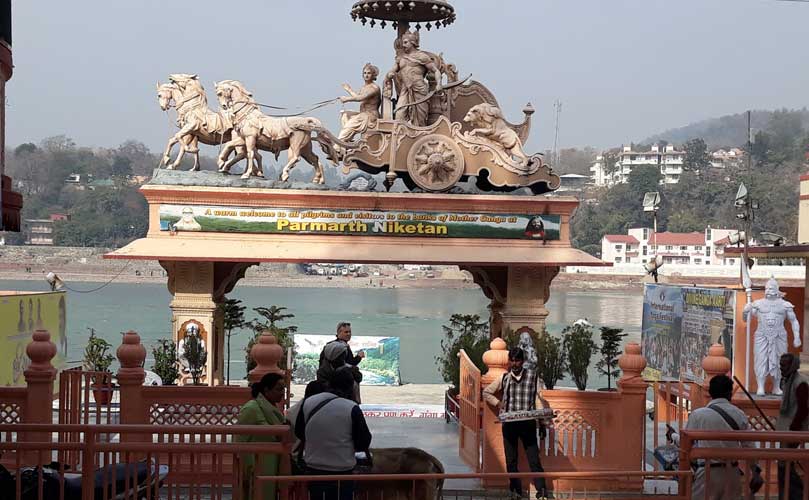
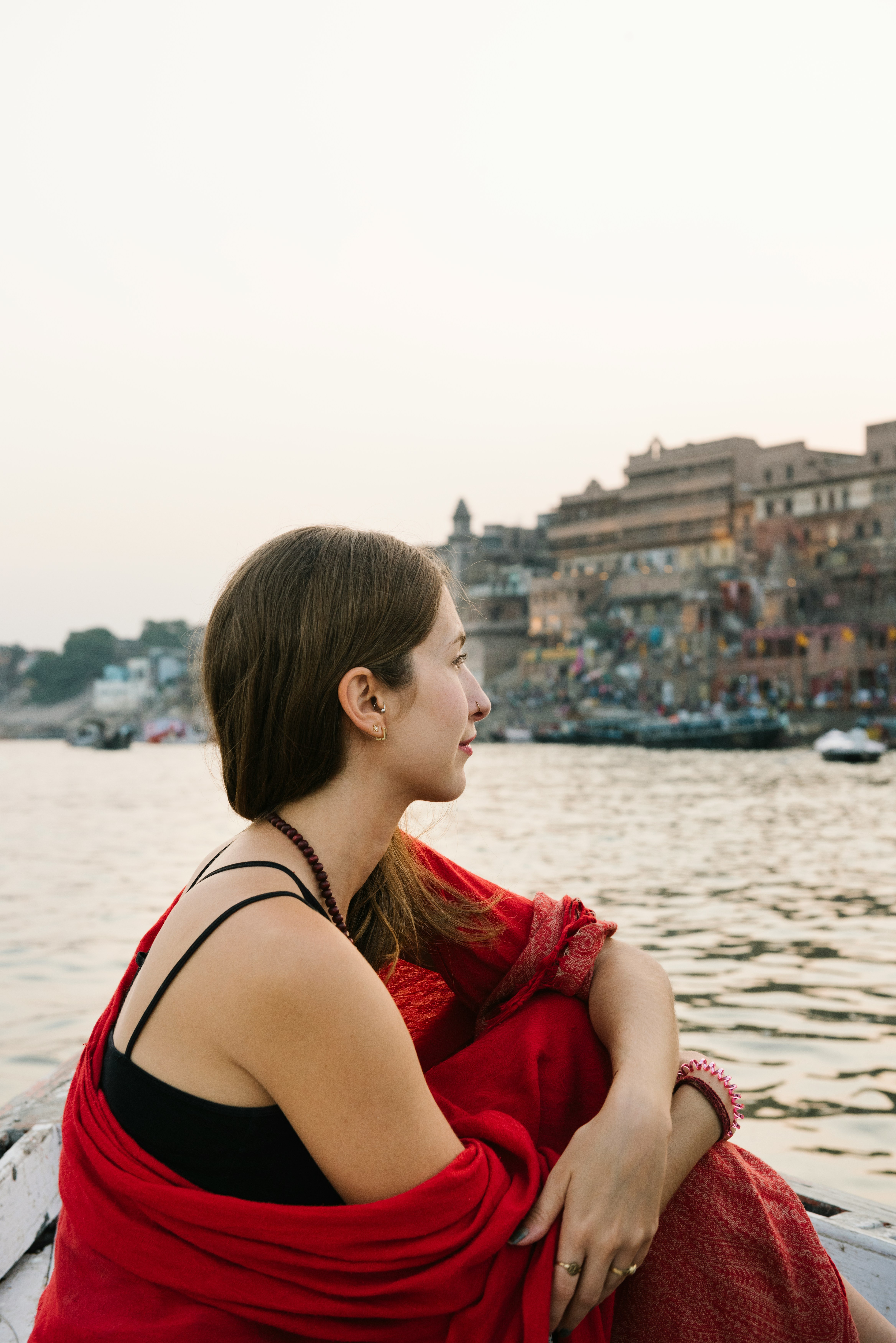
A Golden Triangle with Varanasi package usually adds two nights after Agra or Delhi. The fastest link is a domestic flight from Delhi of about 85 minutes, priced around INR 6,000 to 9,000 (USD 71 to 107) one way, or the Vande Bharat Express from New Delhi in about eight hours. Expect an extra INR 40,000 (USD 476) per person at 4-star level, including a sunrise boat ride, the evening river ceremony seen from a private boat and a half-day trip to Sarnath.
Golden Triangle tour prices by season vary more than most people expect. Peak season runs from October to March, with the highest rates over Diwali, Christmas and New Year. Hotels add compulsory gala dinners on 24 and 31 December that can cost INR 12,000 to 25,000 (USD 143 to 298) per person on top of the room, and palace hotels sell out months ahead. April to June is hot, with Agra and Jaipur often above 40 degrees Celsius, so rates fall by 20 to 30 percent. July to September is monsoon season, still pleasant for sightseeing in short bursts, and the Taj looks wonderful under grey skies with far fewer crowds. Shoulder months like late March and early October are often the sweet spot for value.
Booking a private Golden Triangle tour from Delhi is straightforward once you know what to send. Share your arrival and departure dates and flight times, the number of travellers with ages for any children, your preferred hotel level and any special interests, such as photography, food or textiles. A reputable operator returns a written day-by-day itinerary and an itemised quote, and Payless Tours India sends a free tailor-made version within 24 hours, which you can revise as many times as you like before paying anything.
Once you are happy, most operators ask for a Golden Triangle tour booking deposit of 20 to 30 percent to confirm hotels and the car, with the balance due 30 days before arrival or, for smaller trips, in cash or card on day one. Payment by international bank transfer or a card link is normal, and card payments usually carry a 3 to 4 percent fee. Read the cancellation terms carefully, because palace hotels in peak season often apply full charges within 30 days. Finally, check that your quote names each hotel, the exact car model and whether the guides are licensed, and keep the operator's WhatsApp number, in this case +91-8379812052, handy for the trip itself. With those details settled, your only remaining task is to remember that the Taj stays closed on Fridays.
Everything foreign travellers usually ask before booking a Rajasthan tour. Still unsure? Just send us a message.
Ask a questionA 5-day private Golden Triangle tour costs about INR 42,000 (USD 500) per person at 3-star level, INR 58,000 (USD 690) at 4-star, INR 92,000 (USD 1,095) at 5-star and INR 210,000 (USD 2,500) at palace level, on twin share with car, driver, guides, breakfast and airport transfers. Monument tickets of around INR 5,500 per person are extra.
Foreign tourists pay INR 1,100 (USD 13) for general entry to the Taj Mahal, plus INR 200 (USD 2.40) to enter the main mausoleum, so INR 1,300 in total. The ticket includes shoe covers and water. Children under 15 enter free, and buying online avoids the queue at the ticket window in Agra.
Yes. The Taj Mahal is closed every Friday for prayers, and it is the most common booking error. Agra Fort, Fatehpur Sikri and the Baby Taj remain open on Fridays, so a good itinerary sees the Taj on Thursday or Saturday and uses Friday for the other Agra sights or the 240 km drive to Jaipur.
A Swift Dzire at around INR 3,500 to 4,000 (USD 42 to 48) per day suits one or two light packers. A Toyota Innova Crysta at INR 5,000 to 6,000 (USD 60 to 71) per day suits couples wanting comfort or families of four. Groups of five to nine need a Tempo Traveller at INR 7,500 to 9,000 per day.
A government-licensed English-speaking guide costs about INR 2,500 to 3,000 (USD 30 to 36) for a half day and INR 3,500 to 4,500 (USD 42 to 54) for a full day, for up to four people. Spanish, French or German speakers cost 20 to 40 percent more. Most private packages already include these fees.
The Jaipur composite ticket costs foreigners INR 1,000 (USD 12) and is valid for two days. It covers Amber Fort, Hawa Mahal, Jantar Mantar, Albert Hall Museum and Nahargarh Fort. Bought separately, Amber Fort alone is INR 500 and the others INR 300 each. The City Palace is not included and costs around INR 700 to 1,000.
Two nights in Ranthambore with two jeep safaris add roughly INR 38,000 (USD 452) per person at a 4-star lodge, and INR 120,000 (USD 1,429) or more at luxury camps. A private six-seat jeep costs about INR 16,000 to 18,000 per drive. The core zones close from July to September for the monsoon.
April to September is cheapest, with hotel rates 20 to 30 percent below peak. April to June is very hot, often above 40 degrees Celsius, while July to September brings rain but thin crowds. October to March is peak season, and Christmas and New Year carry compulsory gala dinner charges of INR 12,000 to 25,000 per person.
Most operators ask for a deposit of 20 to 30 percent to confirm hotels and the car, with the balance due 30 days before arrival or on day one. Card payments usually carry a 3 to 4 percent fee. Peak-season palace hotels may charge in full for cancellations made within 30 days of arrival.
Yes. Adding Varanasi usually means two extra nights and costs around INR 40,000 (USD 476) per person at 4-star level. The Delhi to Varanasi flight takes about 85 minutes and costs INR 6,000 to 9,000 one way, while the Vande Bharat Express takes about eight hours. A sunrise boat ride and Sarnath visit are standard inclusions.
Share your details and our travel experts will write back with a tailored itinerary and quote - usually within 24 hours, with no obligation.
Share your query and our team will write back in the shortest possible time with every detail you need.
Tell us when and how you like to travel. We'll send a tailored itinerary within 24 hours - no obligation.
Plan my trip free