Lukas and Hanna had driven a rented motorhome around Norway the summer before, and they arrived in Delhi expecting to do the same thing in India. On their second morning they sat in a hotel lobby in South Delhi, laptops open, scrolling through campervan listings that looked promising until they read the small print. One van came only with a driver. Another was based in Bengaluru, more than 2,000 km away. A third had a lovely kitchenette but no toilet, and the operator suggested they use petrol pumps and roadside restaurants for that.
By lunchtime they had worked out the truth that most foreign visitors learn the hard way: India does have a campervan market, but it is young, small and scattered. There is no national rental chain with one-way returns, no network of serviced campgrounds every 50 km and no standard insurance product built for a tourist behind the wheel. What does exist is a handful of serious operators running converted Force Traveller vans and a few larger coach-built motorhomes, mostly with a driver included, at prices that sit well above a car with a driver.
They still did it. They booked a four-berth van with a driver for nine nights through the Rajasthan desert, slept under the stars near Jaisalmer and cooked their own breakfast at a farm stay outside Bundi. It cost them more than a hotel-based road trip, and they would do it again. This guide sets out the real prices, facilities, rules and routes so that you can decide, with clear eyes, whether a campervan suits your India trip.
The honest headline first: campervan rental in India is a niche business. Across the whole country you will find perhaps a few hundred rentable vans, spread between small private operators, state tourism corporations and online aggregators. Compare that with New Zealand or Australia, where a single company may run thousands of vehicles, and you will see why availability is the first thing to check, not the last.
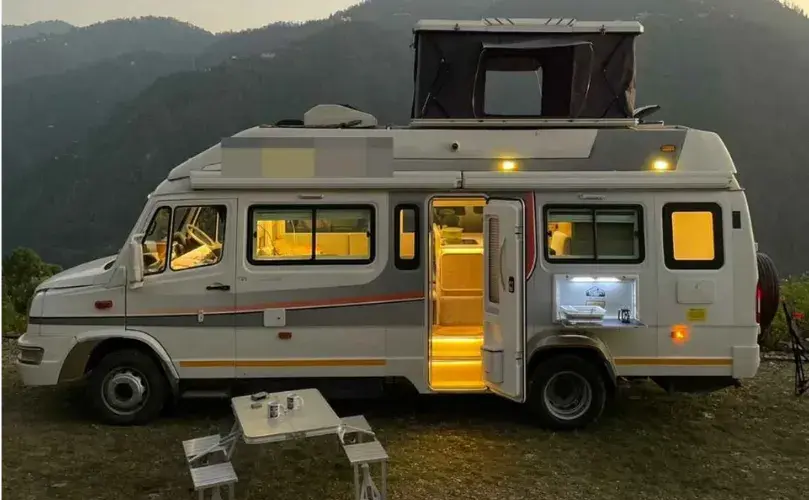
Most vehicles fall into two broad types. By far the most common is the Force Traveller campervan, built on the same chassis as the 12 to 17 seat tourist vans you see on every Indian highway. Converters strip out the rear seats and fit a sofa that folds into a double bed, a small galley, storage, an overhead bunk or roof tent and sometimes a tiny wet room. These vans are tall, robust and can be repaired in almost any town, which matters a great deal on Indian roads. The other group is the larger coach-built motorhome in India, usually on a Bharat Benz, Eicher or Tata truck base, with a proper bedroom, lounge, fixed toilet and shower. They are spacious but heavy, slow on mountain roads and confined mainly to state tourism schemes and premium operators.
The operators cluster in a few places. Delhi and the NCR have companies running Force Traveller conversions for Rajasthan, Himachal and Uttarakhand trips, and Motorhome Adventures runs caravans with a driver from Delhi, Bengaluru and Madhya Pradesh. Mumbai and Pune have several outfits, including The Vacay Vans and CarHOME India, aimed at weekend trips to the Konkan coast and Goa. Goa itself has a few small campervan firms working the beach belt. Kerala pushed caravan tourism through its official Caravan Kerala policy, with state-registered caravans and a caravan park at Vagamon. Karnataka has Luxe Camper, launched with state tourism support, for Hampi, Gokarna, Kabini and Bandipur. In Himachal and Ladakh, you will mostly find vans brought up from Delhi or Chandigarh for the summer season, plus 4x4 pickups such as the Toyota Hilux fitted with roof tents and camper boxes. Aggregator platforms such as BookMyCaravan list vans from many cities in one place, which saves time when you are comparing.
The next thing to know is the driver question. The large majority of Indian campervans are rented with a driver, often called a chauffeur-driven caravan. Operators prefer it because their vans are expensive, insurance for self-drive is complicated and Indian traffic is unforgiving for a newcomer. A small number of companies in Delhi, Goa, Bengaluru and Himachal do offer self-drive campervan hire, usually with a stricter deposit, a minimum age of 23 or 25 and a requirement of several years of licence history.
For foreign visitors, the legal basics are clear. You may drive in India on your home licence together with an International Driving Permit, valid for up to one year from your arrival, and you must carry your passport and visa copy too. India drives on the left, like the UK and Australia. In practice, a self-drive operator will want to see the IDP, your original licence, your passport and often a short test drive before handing over the keys. Some will still insist on a driver for Ladakh and the high Himalayan passes, whatever your licence says.
Explore India Your Way with a Private Campervan
Experience the freedom of the open road with private campervan journeys, flexible routes and personalised travel planning. Discover India's scenic landscapes at your own pace and comfort.
Prices vary with the size of the van, the season and whether a driver is included, but budget on the higher side, because demand in peak months easily outruns supply. A small two-berth Force Traveller camper rental with a driver usually costs INR 12,000 to 18,000 per day (about USD 145 to 215) in the cool season from October to March. A four-berth van with a better kitchen and a chemical toilet runs INR 18,000 to 26,000 per day (USD 215 to 310). Large coach-built motorhomes with a fixed bedroom and shower start around INR 25,000 and reach INR 40,000 per day (USD 300 to 475), especially around Christmas, New Year and the Pushkar camel fair.
Many operators price on a per-km plus minimum-km basis instead of a flat day rate. A common structure is INR 45 to 80 per km with a daily minimum of 250 km, so even a rest day is billed as if you had driven 250 km. State-run caravans follow the same model; Bihar's tourism corporation, for example, charges per kilometre with a 250 km daily minimum plus GST. Mumbai operators sell weekend packages, typically INR 15,000 to 20,000 for a Lonavala or Konkan weekend and INR 24,000 to 35,000 for Goa. Always ask for the full figure including 5% to 18% GST, which is easily forgotten in quotations.
Self-drive rates look cheaper on paper, roughly INR 8,000 to 14,000 per day (USD 95 to 165) for a Force Traveller conversion, but the campervan security deposit is larger. Expect INR 50,000 to 100,000 (USD 595 to 1,190), blocked on a credit card or paid by bank transfer, and refunded seven to 14 days after return once the van has been inspected. Deductions are made for body damage, broken interior fittings, missing equipment, a full grey-water or toilet tank and late return. Insurance usually carries an excess of INR 25,000 to 50,000 per claim, so read the damage clause before you sign.
Driver costs, where the driver is not bundled, add INR 800 to 1,500 per day, plus his food and a separate place to sleep if he does not sleep in the cab. On mountain routes, a driver who knows hill roads is worth far more than the extra fee.
Diesel cost for a campervan is the other big line. A loaded Force Traveller manages about 8 to 11 km per litre on highways and less in the hills. With diesel around INR 88 to 95 per litre, a 3,000 km Rajasthan loop burns roughly 300 to 375 litres, or INR 26,000 to 36,000 (USD 310 to 430). Larger motorhomes on a truck base may manage only 6 to 7 km per litre. Add highway tolls of INR 1,500 to 4,000 per long driving day for a heavy vehicle, interstate permit fees if the van is not on an All India Tourist Permit, and parking or campsite charges, which we cover below. A realistic all-in figure for a nine-night trip for two in a four-berth van with a driver, fuel, tolls and campsites is INR 230,000 to 330,000 (USD 2,740 to 3,930).
Facilities differ widely from van to van, so ask for interior photographs and a written inventory before you pay anything. A well-built campervan with kitchenette and toilet in India normally has the following. The sleeping area is a rear lounge with two facing seats or an L-shaped sofa that folds into a double bed of about 1.8 m by 1.3 m, often with an extra bunk over the cab or a pop-up roof tent for children. Mattresses are usually foam, so bring a sleeping bag liner if you sleep light, and ask whether bedding and towels are included, because some operators charge INR 500 to 1,000 per set.
The galley typically includes a two-burner gas hob or induction plate, a small sink fed by a 60 to 100 litre fresh-water tank, a 40 to 60 litre compressor fridge, basic cookware, plates and cutlery. Premium vans add a microwave, electric kettle and toaster, but those need shore power or a strong battery bank. Bottled drinking water is essential; use the tank water only for washing up.
Toilets are where Indian campervans differ most. Smaller vans often have no toilet at all, and the operator will suggest highway restaurants and petrol stations, which are fine in daytime but not at night. Better vans carry a portable chemical toilet such as a Thetford-type cassette, emptied at a campsite or a proper sewage point every two to three days. Large motorhomes have a fixed toilet and a small hot shower. If a toilet matters to you, put it in writing, and ask how and where you will empty it.
Power usually comes from a solar-powered campervan setup, a roof panel of 200 to 400 watts feeding a leisure battery of 100 to 200 amp-hours, plus charging from the engine alternator while driving. That will run LED lights, USB and phone charging, fans and the fridge, but not air conditioning. Some vans carry a small petrol generator or have a rooftop air-conditioner that only works on shore power or with the engine idling, which is noisy and not permitted at many campsites. In the Rajasthan desert in October or March, a good roof fan and mosquito screens matter more than air conditioning.
Other useful extras include blackout curtains, an awning for shade, folding chairs and a table, a first-aid kit, a fire extinguisher, a spare wheel and jack, GPS tracking and a hand-held tyre inflator. In Ladakh you want a diesel cabin heater, warm duvets and an altitude-rated anti-gel diesel additive, because night temperatures fall below zero even in summer. Ask whether the van has been to high altitude before; vans built for Goa beaches are not always ready for passes above 5,000 m. Finally, check that the cab has working seat belts for every passenger who will ride while the van is moving. Sitting in the rear lounge on the move is common practice in India but is not safe, and you should insist on belted seats for everyone.
Take the Scenic Route, Make Every Moment Yours
From mountain escapes to beautiful countryside routes, explore India on your own terms. Let us plan a personalised campervan adventure with seamless arrangements and memorable experiences.
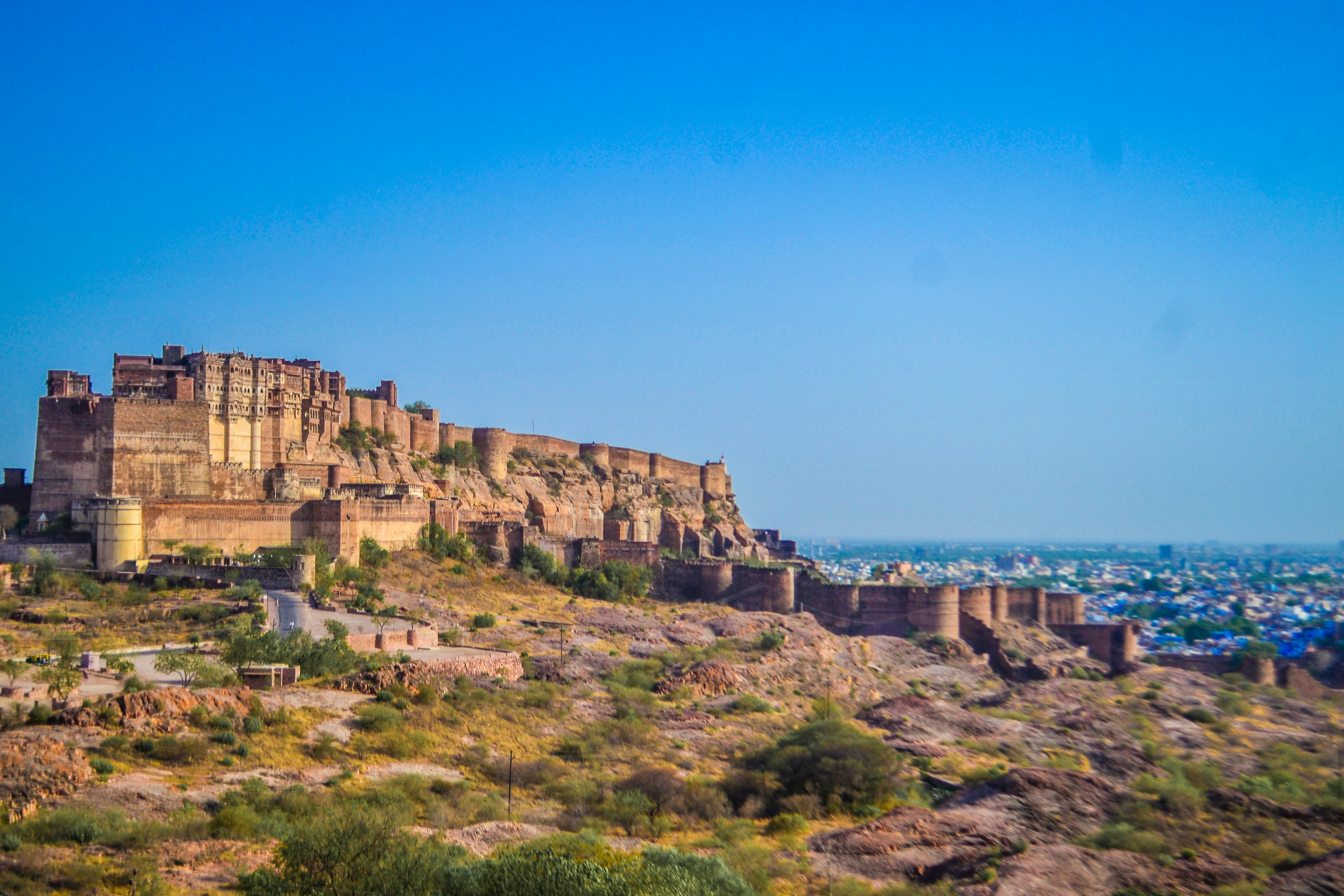
India's best routes for a van are those with long open roads, good scenery and enough places to stop safely overnight. The Rajasthan desert campervan route is the strongest choice from October to March. A typical nine to 12 night loop runs Delhi, Mandawa, Bikaner, Jaisalmer, Jodhpur, Udaipur, Bundi or Pushkar and back to Delhi, about 2,500 to 3,000 km. The national highways are wide and well surfaced, and camel camps outside Jaisalmer at Sam and Khuri, heritage hotels and farm stays will often let a van park overnight for INR 1,500 to 3,000 including use of a bathroom.
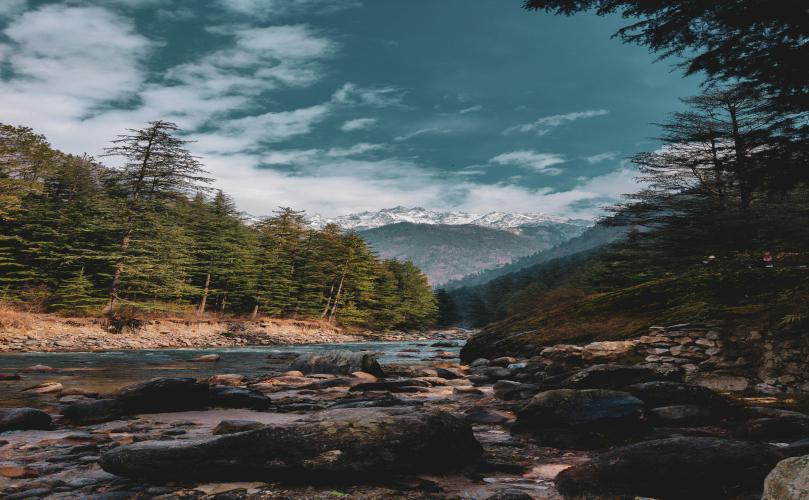
The Himachal campervan trip works from April to June and again from mid-September to October. Routes from Chandigarh through Shimla, Narkanda and the Kinnaur and Spiti valleys, or from Manali to the Kangra valley and Dharamshala, offer forest camping and riverside sites. Roads are narrow and the hairpins are tight, so a compact Force Traveller is the maximum sensible size, and a local hill driver is strongly advised.
A Ladakh motorhome trip is the most dramatic and the most demanding. The season runs from late May to late September, with the Manali to Leh highway and Srinagar to Leh route open only in those months. You need inner-line permits for Nubra, Pangong and Tso Moriri, which cost about INR 600 to 800 per person including environment fees. Overnight stops are mostly campsites and guesthouse courtyards at INR 1,000 to 2,500 per night. Altitude sickness is a real risk, so allow two full rest days in Leh before crossing the high passes.
The Konkan coast campervan route from Mumbai to Goa via Alibag, Murud, Ratnagiri, Ganpatipule and Tarkarli is ideal from November to February, with beach resorts and homestays that welcome vans. From Goa, you can continue south to Gokarna and Karnataka's coast. Coastal roads here are narrower than Rajasthan's highways, and steep approaches to some beaches make a compact van the better choice.
Campsite infrastructure is limited, and this is where most trips succeed or fail. There are a few dedicated caravan parks, such as Kerala's site at Vagamon and new caravan parks proposed by states such as Odisha at wildlife areas for about INR 1,000 per night, but most overnight stops are private: hotels, resorts, farm stays, tea and coffee estates and camping operators who rent you a pitch, water and a bathroom. Overnight parking for campervans on a roadside or in a city street is not advisable. It is unsafe, it attracts police attention and in some states it is simply not allowed. Your operator should hand you a list of tested stops, and in Rajasthan in particular it is wise to book them in advance, because travellers regularly report difficulty finding safe overnight parking there.
Start by deciding on the region and the month, because the van will follow from those two choices. Then contact two or three operators at least eight to 12 weeks ahead for the October to March season, and earlier for Christmas, New Year or the Pushkar fair, when good vans sell out. Ask each one for a campervan rental quote that shows the base rate, the minimum kilometres, the per-km rate beyond that, driver charges, GST, insurance cover and excess, the deposit, the cleaning fee and the one-way drop charge if you will not return to the same city. One-way fees can be high, often INR 20,000 to 40,000, because the van has to be driven back empty.
Ask to see the vehicle registration, the tourist permit, the insurance policy and the fitness certificate. A van used for commercial hire should be registered as a tourist or motor caravan vehicle with the correct permit, and most interstate trips need either an All India Tourist Permit or state-by-state permits paid at borders. If you are driving yourself, confirm in writing that the policy covers a foreign driver with an IDP.
Payment is usually 30% to 50% at booking by bank transfer or card, with the balance and deposit on collection. Card payments to small operators may carry a 2% to 3% surcharge. Collect the van in daylight, film a walk-round video of every panel and the interior, test the gas, the fridge, the water pump, the inverter and the toilet, and note the fuel level and odometer reading.
The campervan does not have to be your whole trip. Many travellers combine five to eight nights in a van through Rajasthan or the Konkan coast with a conventional private tour, staying in hotels for Delhi, Agra and Jaipur, where city traffic and parking make a large van a burden. Payless Tours India, a Delhi-based operator that arranges private tours for overseas travellers, can organise that kind of combination: airport pickup and hotel nights for the city section, an Innova Crysta or Tempo Traveller with an English-speaking driver, and a hand-over to a vetted campervan operator for the open-road part.
If the van market cannot meet your dates, there is a sensible fall-back. A Tempo Traveller and desert camp combination, with tented resorts and heritage hotels along the way, gives you much of the same freedom at INR 7,000 to 10,000 per day plus accommodation, without the worry about water tanks and overnight parking. Either way, keep at least one buffer day in your itinerary, carry printed copies of every document and share your route with someone at home. A van trip in India rewards patience and a slower pace, and the nights under a desert sky are the part you will talk about for years.
Everything foreign travellers usually ask before booking a Rajasthan tour. Still unsure? Just send us a message.
Ask a questionA two-berth Force Traveller campervan with a driver usually costs INR 12,000 to 18,000 per day (USD 145 to 215). A four-berth van with a toilet runs INR 18,000 to 26,000, and a large coach-built motorhome costs INR 25,000 to 40,000 per day. Add fuel, tolls, campsites and GST of 5% to 18% on top.
Yes, with a valid home licence plus an International Driving Permit, which is valid for up to one year from arrival. Only a few operators in Delhi, Goa, Bengaluru and Himachal offer self-drive vans, usually to drivers aged 23 or 25 and above, with a deposit of INR 50,000 to 100,000 and a short test drive.
Self-drive deposits are usually INR 50,000 to 100,000 (USD 595 to 1,190), held on a credit card or paid by bank transfer. Vans with a driver often need only INR 10,000 to 25,000. Refunds normally arrive seven to 14 days after return, minus any charges for damage, cleaning, a full toilet tank or late return.
A Force Traveller campervan returns about 8 to 11 km per litre on highways. With diesel at roughly INR 88 to 95 per litre, a 3,000 km Rajasthan loop uses 300 to 375 litres, costing INR 26,000 to 36,000 (USD 310 to 430). Larger truck-based motorhomes may manage only 6 to 7 km per litre.
Not always. Many smaller vans have no toilet at all. Better four-berth vans carry a portable chemical toilet that needs emptying every two to three days, and large motorhomes have a fixed toilet with a small hot shower. Confirm the toilet type in writing and ask where you can empty it along your route.
Use hotels, resorts, farm stays, desert camps and dedicated caravan parks, which typically charge INR 1,000 to 3,000 per night including a bathroom. Roadside and city-street parking is unsafe and often not permitted. Ask your operator for a list of tested stops, and book Rajasthan overnight stops in advance.
Rajasthan and the Konkan coast are best from October to March, when days are around 25 to 30°C. Himachal suits April to June and mid-September to October. Ladakh is open only from late May to late September. Avoid the monsoon from July to September on the west coast and in the hills.
Yes, from late May to late September, ideally with a local hill driver. You need inner-line permits for Nubra, Pangong and Tso Moriri, costing about INR 600 to 800 per person. The van should have a cabin heater and winter-grade diesel, and you should rest two days in Leh before crossing passes above 5,000 m.
Book eight to 12 weeks ahead for October to March, and three to four months ahead for Christmas, New Year and the Pushkar fair. Supply is small, so the best vans go first. A deposit of 30% to 50% normally secures the booking, with the balance paid on collection.
Usually not. A nine-night campervan trip for two costs about INR 230,000 to 330,000 all-in, while an Innova Crysta with driver and good hotels for the same route often costs INR 180,000 to 280,000. Choose a campervan for the freedom and the open-air nights, not to save money.
Share your details and our travel experts will write back with a tailored itinerary and quote - usually within 24 hours, with no obligation.
Share your query and our team will write back in the shortest possible time with every detail you need.
Tell us when and how you like to travel. We'll send a tailored itinerary within 24 hours - no obligation.
Plan my trip free