Claire from Bristol booked her first India trip on one line from an operator's email: "car with English-speaking driver included". On day one in Delhi, her driver, Mahesh, greeted her with a warm "Good morning, madam, welcome," and then went quiet for most of the drive to Agra. When she asked what the white domes near the highway were, he smiled and said, "Temple, madam." It was not rude. It was simply the limit of his English. Two days later, in Jaipur, the same company swapped in a driver called Vikram who chatted about cricket, the local elections and his daughter's school exams for five hours straight. Same price, same car, very different trip.
That difference is what foreign visitors are really paying for when they ask for an English-speaking driver in India. The phrase covers everything from a dozen polite words to near-fluent conversation, and the price premium ranges just as widely. This guide looks at the trip from the visitor's side: what "English-speaking" actually means, what it costs on top of a normal driver, why a driver is not a guide, what licensed guides charge in each city, how to test a driver's English before you pay, and how tipping, food and lodging work for the man who will spend every day with you.
In the Indian travel trade, "English-speaking" is a broad label, and it helps to know the three rough levels behind it. The first is basic English: greetings, directions, timings, "hotel", "lunch", "ten minutes", and enough to handle a pickup and a drop. Most tourist drivers in Delhi, Agra and Jaipur reach this level. The second is conversational English: he can explain why the road is closed, suggest a lunch stop, tell you a little about the city and answer simple questions. The third is fluent English, which is rare among drivers: full conversation, humour, history and some idea of what a foreign visitor wants to know.
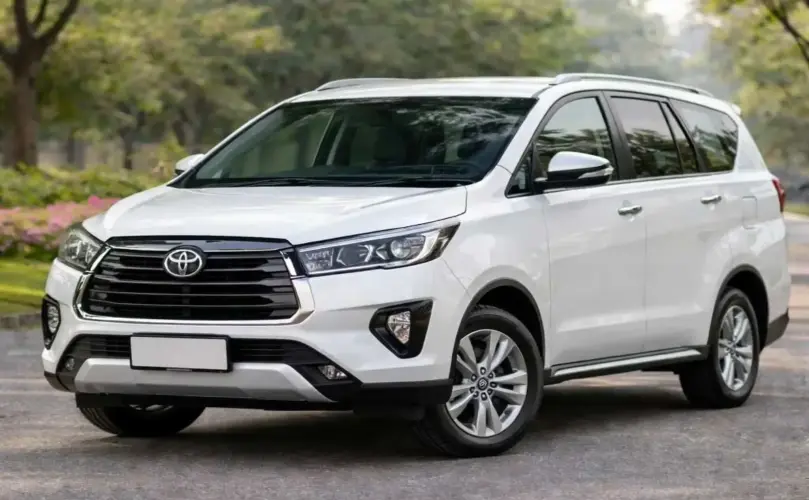
The English-speaking driver premium is usually INR 500-1,500 per day over a driver with basic English, or USD 6-18. On an Innova Crysta that might take the day rate from INR 5,200 to INR 6,000-6,500. Over 14 days the premium comes to about INR 7,000-21,000 (USD 82-247). It is not a separate line on most quotes; operators simply assign their better English speakers to the higher-priced bookings. The premium buys you fewer misunderstandings, more useful advice on the road, and a calmer time at hotel check-ins and fuel stops.
Fluent drivers tend to be older, often 35 to 50, with ten or more years of foreign clients behind them. Many learned English on the job, not at school. Some have worked as hotel drivers for the Oberoi or Taj groups. They are the first to be booked between October and March, so if language matters to you, request a named driver early and confirm the name in writing a week before arrival. If the operator cannot name him, the assignment is not yet fixed. Ask, too, whether the same driver stays for the whole trip or changes between cities.
There is a trade-off worth knowing. A very talkative driver can also be a driver who steers you toward a cousin's carpet shop. Good English and good honesty are separate skills. When you agree the booking, say clearly that you do not want shopping stops unless you ask. An experienced driver will respect that, and a good company will have already told him. Ask the operator directly whether their drivers earn commission from shops; a straight answer is a good sign.
Expectations also matter. An English-speaking driver is a driver first. He will keep you safe on the Agra highway, find the right gate at Amber Fort and wait patiently while you shop in Johari Market. He is not paid to give a two-hour history lecture, and the law does not allow him to guide you inside protected monuments, which is where the next section comes in.
Hire an English-Speaking Driver for Your India Trip
Explore India with greater comfort and confidence with a driver who can communicate in English. Whether you're planning city sightseeing, airport transfers or a multi-city holiday, find a suitable private transport option based on your route and budget.
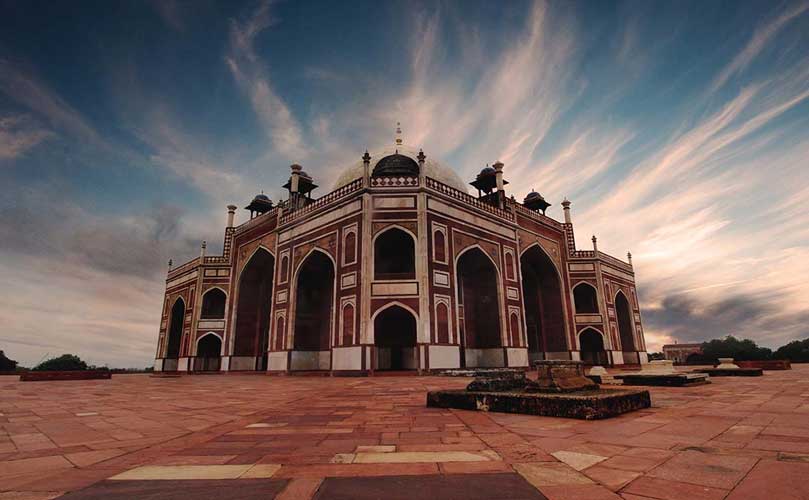
The rule that surprises visitors most is that a driver cannot guide inside monuments. At sites run by the Archaeological Survey of India, such as the Taj Mahal, Agra Fort, Fatehpur Sikri, Red Fort, Qutub Minar and Humayun's Tomb, only guides holding a government or ASI licence may take paying tourists around. State-run sites like Amber Fort and the City Palace in Jaipur have their own approved guides. Drivers usually wait in the car park, and many are not even allowed past the ticket gate unless they buy a ticket themselves.
That is why most good itineraries pair an English-speaking driver with a licensed English-speaking guide in the main cities. In Delhi, Agra and Jaipur a guide costs INR 2,500-4,000 for a half day (up to four hours) and INR 3,500-5,500 for a full day (up to eight hours), or roughly USD 30-65. The guide meets you at the hotel or the monument gate, rides in your car for the day and leaves at the end. Guide fees do not include monument tickets, and the guide enters most sites free or at a small charge on his licence.
A sensible pattern on a Golden Triangle trip looks like this. In Delhi, a full-day guide for Old Delhi, Jama Masjid, Red Fort (INR 550 for foreigners, closed Mondays), Humayun's Tomb (INR 600) and Qutub Minar (INR 600). In Agra, a half-day guide for the Taj Mahal (INR 1,100 plus INR 200 for the main mausoleum, opens 30 minutes before sunrise, closed Fridays) and Agra Fort (INR 650), with a second half day for Fatehpur Sikri guide fees on the road to Jaipur (INR 610 ticket). In Jaipur, a full day for Amber Fort (INR 500, 8:00 am to 5:30 pm), City Palace (about INR 700), Jantar Mantar and Hawa Mahal. That adds up to around INR 14,000-19,000 (USD 165-225) in guide fees for the three cities.
Foreign-language guides cost more because there are fewer of them. French, Spanish, German and Italian guides charge INR 4,500-7,000 per day, and Japanese, Russian or Mandarin speakers can be higher still, especially in peak months. Agra and Jaipur have the widest choice; Udaipur, Jodhpur and Varanasi have fewer, so they must be booked weeks ahead. A foreign-language driver is very hard to find in India; the realistic option is an English-speaking driver plus a guide in your language at each major stop.
Some couples skip guides altogether and rely on audio guides or a good book. That works well at Humayun's Tomb or Hawa Mahal, but at the Taj Mahal and Fatehpur Sikri a guide saves real time in the queues, steers you to the right gate, and points out the inlay work and the stories behind it. At Payless Tours India we book guides only where they add something, and leave the smaller sites to the traveller.
The simplest way to avoid Claire's first day is to speak to the driver before you pay the deposit. Most operators will share the driver's WhatsApp number once the booking is likely. Ask for a WhatsApp video call of five to ten minutes, ideally a week or two before you fly. A video call is better than a voice note because you see how he reacts when he does not quite follow, and he sees who he will be driving.
Keep the questions practical and open, not yes-or-no. Ask him to describe the drive from Delhi to Agra: which road, how long, where you would stop. Ask what time you should leave for a Taj Mahal sunrise and why. Ask what he would suggest for lunch between Agra and Jaipur. A driver with conversational English will answer in full sentences, mention the Yamuna Expressway, suggest leaving the hotel around 5:30 am and maybe name a roadside restaurant near Mahua. A driver with basic English will answer "yes, madam, no problem" to most of it.
Listen for the details rather than the accent. Indian English has its own rhythm, and an accent that sounds strong at first is often easy to follow after a day. What matters is whether he understands your question, asks you to repeat when unsure, and uses specific words such as times, distances and place names. Testing English before booking should also include a quick check of his listening: say something slightly unusual, like "we have a wheelchair-folding stroller", and see whether he asks what you mean.
If the call goes poorly, ask the operator for another driver straight away. A professional company will not take offence; matching drivers to clients is part of the job. Ask for the replacement's name and repeat the call. If no other driver is available for your dates, consider adding a full-day guide in Delhi and Jaipur, where conversation matters most, and accept a quieter driver on the highway days. Some travellers actually prefer that.
Use the same call to settle the small things: his name, the car number, where he will wait at the airport (most good drivers stand near pillar 6 or the meeting point outside Terminal 3 with a printed name card), whether he smokes, and what time he usually starts. Ask him to send a photo of the car. A driver who handles all this calmly on WhatsApp will handle a closed road in Jaipur just as calmly. The ten minutes you spend on the call are the cheapest insurance on the trip, and they cost nothing at all.
Explore India City by City with an English-Speaking Driver
From the Golden Triangle to longer journeys across Rajasthan and beyond, private transport makes exploring India more convenient. Arrange a driver for your planned route and enjoy the flexibility to discover destinations at your own pace.
Tipping is expected in Indian tourism, and it forms a real part of a driver's income. The fair norm for a good driver is INR 500-1,000 per day, or about USD 6-12. Over a 10-day trip that is INR 5,000-10,000 (USD 59-118), paid in one envelope on the last day. Families or groups in a Tempo Traveller often tip at the upper end. If the driver was outstanding, helped with a sick child, or drove through a long, hard day in fog, INR 1,200-1,500 a day is generous but not unusual. Tipping your driver in India in rupees is better than in dollars or euros, since changing small foreign notes costs him time and commission.
Guides are tipped separately. A typical figure is INR 300-500 for a half day and INR 500-1,000 for a full day, given at the end of the tour. Hotel porters expect INR 50-100 per bag. You do not need to tip at every toll booth, parking stop or fuel station; that is the driver's responsibility and his allowance covers it. If you are unsure, it is fine to ask the operator what is normal for your trip length.
The question many guests ask on day two is where the driver goes at night. In Agra, Jaipur, Udaipur and most tourist cities, hotels keep driver accommodation in a separate block or a dormitory near the car park, with beds, washrooms and a canteen. Large hotels such as the ITC Mughal in Agra or the Trident in Jaipur have proper drivers' rooms; small guesthouses sometimes do not, and the driver finds a nearby lodge. This is what the driver night allowance of INR 400-600 a night on your bill is for. You do not pay for his room directly.
Driver food and lodging on the road work the same way. At lunch, most drivers eat separately, at the drivers' section of a highway restaurant or a nearby canteen, often with other drivers they know. If you invite him to join you, he may say yes once or twice, and it is a kind gesture, but many drivers prefer their own break. Do not feel you must buy his meals; his allowance and wages cover them. A cold bottle of water or a cup of tea on a hot afternoon is always appreciated.
Respect a few unwritten rules and the relationship stays easy. Give him a fixed start time each evening for the next morning. Let him rest between 1 and 3 pm on long sightseeing days if possible. Avoid asking him to drive after 10 pm unless it was agreed. And if anything bothers you, from speed to shopping stops, tell him early and politely, then tell the office if it continues. The best drivers in India stay with the same foreign families for years of repeat trips, and it usually begins with clear, kind expectations on day one.
Everything foreign travellers usually ask before booking a Rajasthan tour. Still unsure? Just send us a message.
Ask a questionUsually INR 500-1,500 (USD 6-18) per day more than a driver with basic English. On an Innova Crysta that takes the day rate from about INR 5,200 to INR 6,000-6,500. Fluent drivers are in short supply between October and March.
No. Only licensed guides may take paying tourists around ASI sites such as the Taj Mahal, Agra Fort and Red Fort. Your driver waits at the car park while you visit.
An English-speaking guide costs INR 2,500-4,000 for a half day and INR 3,500-5,500 for a full day. Monument tickets are extra. For a full Golden Triangle trip, guide fees total around INR 14,000-19,000.
Yes, in most major cities, at INR 4,500-7,000 per day. Agra and Jaipur have the most choice. Book weeks ahead for Udaipur, Jodhpur or Varanasi, especially in peak season.
It is rare. The practical option is an English-speaking driver plus a guide in your language at the main monuments. Some operators have one or two drivers with basic Spanish or French, but it cannot be guaranteed.
Ask the operator for the driver's WhatsApp number and hold a 5-10 minute video call. Ask open questions about the route, timings and lunch stops. If he answers only "yes, no problem", ask for another driver.
INR 500-1,000 (USD 6-12) per day is the fair norm, paid in rupees at the end of the trip. For outstanding service, INR 1,200-1,500 a day is generous. Guides are tipped separately at INR 500-1,000 for a full day.
Not directly. The driver night allowance of INR 400-600 per night on your bill covers his room and dinner. Most hotels have drivers' rooms near the car park.
You do not have to; his wages and allowance cover his food. Many drivers prefer to eat with other drivers at a highway restaurant. Inviting him once is a kind gesture.
Some drivers do earn shop commissions, whatever their English level. Tell the operator and the driver on day one that you want no shopping stops unless you ask. A good company will already have briefed him.
Share your details and our travel experts will write back with a tailored itinerary and quote - usually within 24 hours, with no obligation.
Share your query and our team will write back in the shortest possible time with every detail you need.
Tell us when and how you like to travel. We'll send a tailored itinerary within 24 hours - no obligation.
Plan my trip free