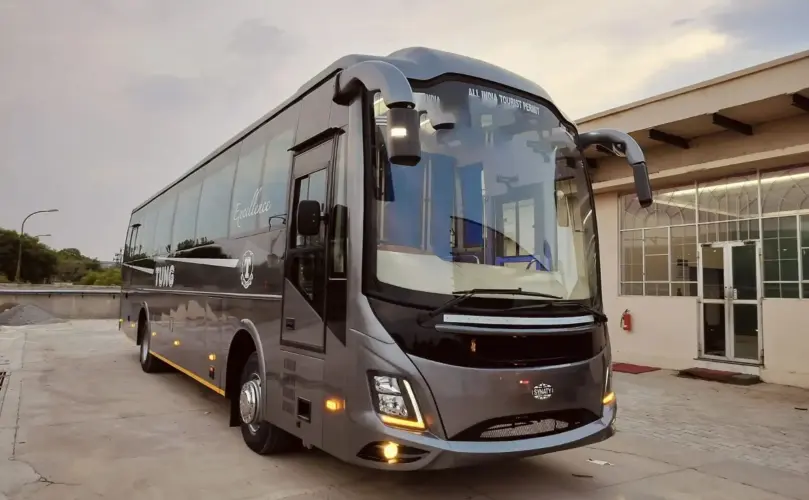
At half past six on a cold January morning, forty-one members of a Rotary club from Melbourne stood in the forecourt of the Leela Ambience in Gurugram, watching a white 45-seater Volvo B11R reverse into the porch. Rakesh, the senior driver, had been up since four. His co-driver, Imran, had washed the windows, checked the tyre pressures and loaded forty-one suitcases into the underfloor bays before most of the group finished breakfast. When the club president climbed the steps, he looked down the aisle at the reclining seats, the overhead lockers and the small washroom at the back, and said, "Right, this will do for a week."
A big coach is the obvious answer for a group of thirty to forty-five, but it is also the vehicle that causes the most confusion in quotes. The Volvo coach rental price in India depends on per-km billing with a high daily minimum, two crew members who both need rooms and allowances, coach parking rules at every major monument, and a list of roads where a 12-metre coach simply cannot go. This guide covers the vehicles themselves, the real rates, the crew system, the route limits in Jaipur, Agra and the hills, and what forty guests pay per head for a Golden Triangle week.
The 45-seater Volvo coach is the flagship of Indian group travel. Most operators run the Volvo B9R, an older but reliable model with a 9-litre rear engine, or the newer Volvo B11R, which has an 11-litre engine, more power on hill climbs and a quieter cabin. Both are built on a 12 to 13.5-metre chassis, with bodywork fitted in India. Scania Metrolink and Scania Touring type coaches offer a similar experience, with good brakes and strong engines, and in some fleets you will also see Mercedes-Benz SHD or Bharat Benz luxury coaches. For a foreign group, the brand matters less than the age and maintenance of the vehicle. A well-kept four-year-old B9R is a better coach than a neglected two-year-old B11R.
The feature that sets these coaches apart from Indian-built truck-chassis buses is air suspension. Instead of leaf springs, the coach rides on air bags, which keep the cabin level and soak up the bumps on expressways and city roads. On the Yamuna Expressway from Delhi to Agra, at a steady 80 km per hour, a good Volvo feels close to a European touring coach. On a truck-chassis 35-seater the same journey is noisier and bumpier, and the rear rows feel it most.
Inside, a luxury coach with reclining seats usually has 2+2 seating with a central aisle, individual seat recline of 30 to 40 degrees, armrests, footrests on better coaches, reading lights, air-conditioning vents for each seat and overhead racks for coats and bags. A public address system with microphone is standard, which matters because your guide will speak to the group for many hours. USB charging points, curtains, a television screen at the front and a small fridge are found on most newer coaches. A coach with washroom has a small chemical toilet at the rear, very useful on long legs such as Agra to Jaipur, but these are less common in India and cost INR 5,000-10,000 more per day. Ask for it specifically if the group includes elderly travellers.
Luggage travels in the underfloor bays, which are large: a 45-seater can carry forty-five full-size suitcases plus carry-on items, with room to spare. That is a big advantage over smaller coaches, where a luggage van is often needed. Wheelchairs and folding walkers fit in the bays too. Many coaches also have a front door with a step height of around 40 centimetres, and the driver's helper carries a portable step for anyone who struggles. Seat belts are fitted on most new coaches, though not on every older one, so ask.
At Payless Tours India we always send photographs of the exact coach with its registration number before the deposit is paid, because the difference between two coaches sold under the same name can be large. Ask any operator for the year of registration, the model and a picture of the interior. A coach that is more than seven or eight years old on a long route is not one you want for a week.
Explore India Together with a Luxury Volvo Coach
From Golden Triangle sightseeing to extended Rajasthan and North India itineraries, enjoy the convenience of private group transportation. Customise your route and request a coach rental quote based on your travel plans and passenger requirements.
Luxury coaches are almost always billed per kilometre, with a daily minimum. The Volvo coach rate per km on the higher side of the market is INR 110-140 (USD 1.30-1.65), depending on the model, age, season and route. The daily minimum is usually 300-350 km, which means a day where the coach only covers 120 km is still billed at 300 or 350 km. A Scania or newer B11R often sits at the top of that range, and a coach with a washroom adds a further premium. For local use within one city, many operators quote a fixed day: a Delhi local day of 8 to 10 hours and around 80-100 km costs INR 30,000-40,000 (USD 353-470).
That daily minimum is the most important number in the quote. Take a 300 km minimum at INR 125 per km. Every day of the trip costs at least INR 37,500 for the coach alone, even if the group spends the day walking around Jaipur's old city. A quote with a 350 km minimum at INR 115 looks cheaper per km but comes to INR 40,250 a day, which is more expensive. Always multiply the rate by the minimum to compare offers properly.
The coach rate covers diesel, the coach, the two crew members' wages and normal maintenance. The extras are significant, and an honest quote shows each one. Tolls for a large coach are two to three times those for a car: the Delhi to Agra run on the Yamuna Expressway costs around INR 2,200-2,600 one way, and Agra to Jaipur another INR 1,500-2,000. State border taxes for a 45-seater entering Uttar Pradesh or Rajasthan can be INR 15,000-30,000 per entry depending on seats and days, though an all-India tourist permit reduces some of this. Parking at monuments, hotels and markets ranges from INR 500 to INR 1,500 each time. The two-crew allowance is INR 700-1,000 per crew member per night, so INR 1,400-2,000 a night in total. Night driving between 10 pm and 6 am is often charged at INR 1,000-2,000, and many operators simply refuse to run a coach on highways after 11 pm. And 5% GST is charged on the total.
The 45-seater coach hire cost varies with the season. October to March is peak season for foreign groups, and good coaches are booked three to six months ahead. Prices can be 10 to 15% higher over Christmas, New Year and the wedding months of November and February, when Indian families also hire coaches in large numbers. April to June is hot but cheaper, and some operators offer discounts of 10 to 20% to keep their fleet working. The monsoon months of July to September bring rain, but the roads of the Golden Triangle stay open. Book early, confirm in writing, and ask for the vehicle to be named on the contract, so a newer coach is not swapped for an older one the day before arrival.
Every large coach in India travels with two crew. The first is the main driver, usually an experienced man with ten or more years behind the wheel of heavy vehicles. The second is either a co-driver who shares long highway legs or a helper, often called the conductor or cleaner, who loads luggage, guides the driver when reversing, cleans the coach and watches the vehicle while the group is inside a monument. On the Rotary trip, Rakesh drove and Imran did everything else, and by day two the group knew Imran was the man who knew the cleanest toilets on every road.
The two-crew coach system is not optional for long days. Indian highways have heavy truck traffic, unexpected cattle, and drivers who overtake on blind bends. A driver who has been at the wheel for nine hours makes mistakes. Good operators limit driving to around eight to ten hours a day and require the co-driver to take over on longer legs. Ask the operator whether the second crew member holds a heavy vehicle licence, because some helpers do not. The cost is built into the night allowance, at INR 700-1,000 per person per night, plus a room. Many hotels give crew a free dormitory. Some operators expect crew to sleep inside the coach, which is unsafe in winter and leaves the driver exhausted the next morning. Insist on a proper room.
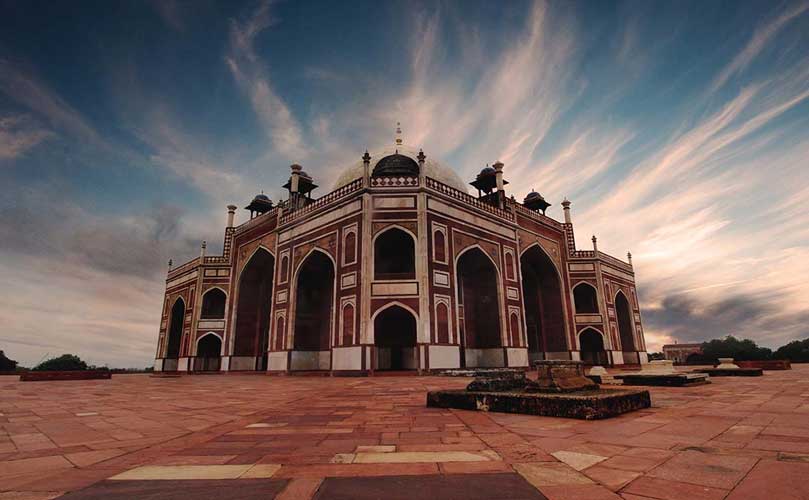
Volvo coach parking is the next challenge. A 12-metre coach needs a large, legal space, and most Indian cities have very few. At the Taj Mahal, coaches use the parking at Shilpgram near the East Gate, from where battery buses and electric carts take the group about one kilometre to the gate for INR 20-50 per person. At Amber Fort in Jaipur, coaches park below the fort and the group goes up by jeep at INR 400-600 per jeep, or walks up the ramp. At Qutub Minar and Humayun's Tomb in Delhi, there is coach parking close to the entrance. Hotels are a different story. Many heritage hotels in Jaipur's old city and Udaipur's lake area cannot take a coach at all, so the group is dropped on the main road and walks or takes a shuttle.
Night halts need the same thought. The crew must park the coach somewhere safe overnight, usually in the hotel's own car park or a secured lot nearby, at INR 300-800 per night. Large five-star hotels such as the ITC Mughal in Agra, the Jaipur Marriott and the Trident Jaipur have space for coaches and crew. Smaller boutique hotels often do not, so the coach goes to a public lot and returns at seven the next morning.
Finally, keep the daily schedule realistic. A Volvo on a Golden Triangle route averages 55-65 km per hour on expressways and 25-30 km per hour in city traffic. Delhi to Agra takes about four hours including a break, Agra to Jaipur with a stop at Fatehpur Sikri about six hours, and Jaipur to Delhi five to six hours. Leave in the morning, arrive by mid-afternoon, and the crew stay fresh for the whole week.
Book a Luxury Volvo Coach for Your India Tour
Make group travel more comfortable with a luxury Volvo coach and professional driver. Whether you're organising a corporate trip, special event or extended India tour, arrange spacious group transportation tailored to your itinerary and travel requirements.
The single biggest mistake in coach trips is assuming a 45-seater can go wherever a car goes. It cannot, and the routes need to be designed around the coach. Jaipur's old walled city is the clearest example. The lanes around the Hawa Mahal, Johari Market and the City Palace were laid out for camels, horses and carts. Large coaches are not permitted inside many of these areas during the day, and even where they are, a 12-metre vehicle cannot turn into the side streets. The group is dropped at one of the main gates, such as Chandpole or Sanganeri Gate, and walks or takes auto-rickshaws inside. Factor that time into the day and warn guests with limited mobility in advance.
Agra has the strictest rules. The area around the Taj Mahal is a Taj Trapezium Zone for pollution control, and petrol and diesel vehicles are not allowed within roughly 500 metres of the monument. That is why coaches stop at Shilpgram. The Taj Mahal opens 30 minutes before sunrise and is closed on Fridays. Foreign visitors pay INR 1,100 plus INR 200 for the main mausoleum, so forty guests pay INR 52,000 in tickets. Agra Fort (INR 650 for foreigners) and Fatehpur Sikri (INR 610) have coach parking close by, but Mehtab Bagh, across the river for sunset views at around INR 300 for foreigners, is reached by a narrow road that larger coaches find difficult, so smaller vehicles are often hired for that one hour.
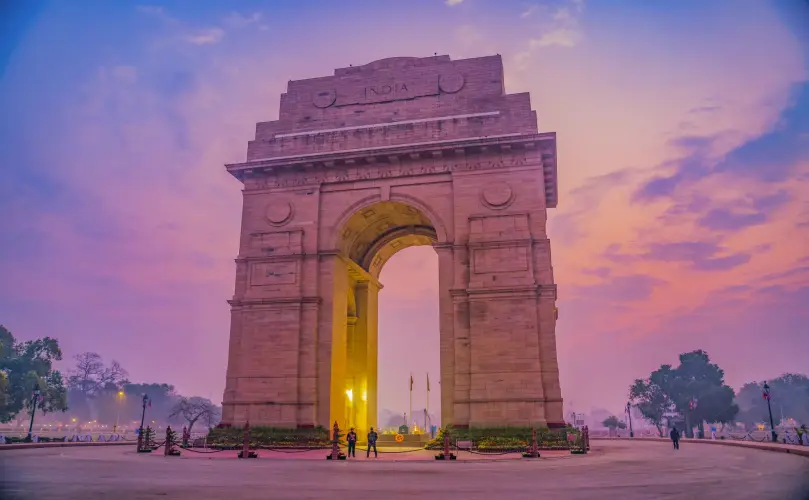
Delhi has its own limits. Old Delhi around Chandni Chowk and the Jama Masjid is closed to coaches, so groups park near the Red Fort (foreigners INR 550, closed Mondays) and take cycle-rickshaws through the lanes. New Delhi's wide avenues around India Gate and Kartavya Path are fine. Akshardham, closed on Mondays, has a large coach park.
Hill roads for coaches are a separate question. Shimla, Mussoorie, Nainital and Darjeeling roads are narrow, twisting and often single-lane in places, and full-size Volvos are generally not allowed or not practical beyond the foothills. Groups going to the hills switch to 17 or 26-seater coaches or Tempo Travellers at the foot of the climb, such as Kalka for Shimla or Dehradun for Mussoorie, with luggage moved across. In Rajasthan, the road up to Kumbhalgarh Fort and the lanes of Bundi are tight for a 45-seater, and the approach to Chand Baori at Abhaneri is a narrow village road where coaches park outside and the group walks.
The answer is to build the route around the coach. Use it for the long highway legs, where its comfort and air suspension shine, and add short local transfers in smaller vehicles where needed. A small shuttle van in Jaipur's old city or a fleet of jeeps at Amber Fort costs a fraction of the coach rate and makes the day far smoother for forty people.
Here is how the numbers work for a group of forty on a seven-day Golden Triangle route in a 45-seater Volvo B11R. Days one and two cover the airport pickup and Delhi sightseeing. Day three is the drive to Agra on the Yamuna Expressway, about 230 km, with Agra Fort in the afternoon. Day four starts with the Taj Mahal at sunrise, then Fatehpur Sikri, and continues to Jaipur, about 240 km in total. Day five is Amber Fort, the City Palace and the Hawa Mahal. Day six is a lighter day in Jaipur. Day seven is the drive back to Delhi, about 270 km, ending at the airport for evening flights.
The actual distance is about 1,250 km, but with a 300 km daily minimum over seven days the billed distance is 2,100 km. That is the key point for anyone pricing a Golden Triangle coach tour: the short city days are billed as if the coach drove 300 km. At INR 125 per km, the coach comes to INR 262,500. Tolls for the week add about INR 14,000. State border taxes for Uttar Pradesh and Rajasthan, even with an all-India permit, come to roughly INR 40,000-50,000; we will use INR 45,000. Parking at monuments and hotels over seven days is around INR 8,000. The two-crew night allowance at INR 2,000 a night for six nights is INR 12,000. The subtotal is INR 341,500, and 5% GST brings the total to about INR 358,600, or USD 4,220.
Divided by forty guests, the Volvo coach cost per person is about INR 8,965, or roughly USD 105, for a full week of private luxury transport. Add local shuttles where the coach cannot go: around ten jeeps at Amber Fort at INR 500 each, battery buses at Shilpgram, and a small van in Old Delhi, which together come to about INR 15,000, or INR 375 per head. The all-in transport figure is therefore close to USD 110 per person. With thirty guests instead of forty, the same coach costs about USD 147 each, so a half-full Volvo is poor value and a 35-seater coach at INR 75-85 per km is often the better choice for groups of twenty-five to thirty.
Monument tickets for foreigners over the week come to about INR 4,850 per person: Taj Mahal INR 1,300 including the mausoleum, Agra Fort INR 650, Fatehpur Sikri INR 610, Amber Fort INR 500, City Palace Jaipur about INR 700, Red Fort INR 550 and Humayun's Tomb INR 600, with Qutub Minar and the Jantar Mantar extra. A licensed English-speaking guide for the whole group costs INR 3,500-5,500 a day in each city. Tips for the crew, usually INR 500-1,000 per guest for the week, are customary but not compulsory.
Before you pay a deposit, ask for the exact coach, the per-km rate and minimum, an estimate of tolls and taxes, the crew arrangements and the cancellation terms in writing. Get those right, and a luxury coach hire with driver gives forty people the comfort of a private vehicle at the per-head cost of a mid-size car.
Everything foreign travellers usually ask before booking a Rajasthan tour. Still unsure? Just send us a message.
Ask a questionA 45-seater Volvo costs INR 110-140 per km with a 300-350 km daily minimum, which works out to INR 33,000-49,000 (USD 388-576) a day for outstation trips. A Delhi local day of 8-10 hours costs INR 30,000-40,000.
Most operators set a minimum of 300-350 km per day, even on days when the coach does not leave the city. Always multiply the per-km rate by the daily minimum to compare quotes fairly.
Tolls, state border taxes, parking, two-crew night allowance of INR 1,400-2,000, night driving charges and 5% GST are usually extra. State taxes alone can be INR 15,000-30,000 per state entry.
A few luxury coaches have a small chemical toilet at the rear, but most do not. A coach with a washroom costs INR 5,000-10,000 more per day and must be requested at booking.
No. Diesel coaches are kept about 500 metres from the monument and park at Shilpgram near the East Gate. Battery buses or carts carry guests about one kilometre to the gate for INR 20-50.
Large coaches cannot enter most lanes around the Hawa Mahal and City Palace. Groups are dropped at a main gate such as Chandpole or Sanganeri Gate and walk or take auto-rickshaws inside.
Full-size Volvos are generally not used on narrow hill roads. Groups switch to 17 or 26-seater coaches or Tempo Travellers at the foothills, such as Kalka for Shimla.
For a seven-day route, the coach costs about INR 358,600 (USD 4,220) all in, which is roughly USD 105 per person. With local shuttles and jeeps, budget about USD 110 per person.
The co-driver or helper shares long drives, loads luggage, guides reversing and guards the coach. Each crew member receives INR 700-1,000 a night plus a room.
Book three to six months ahead for October to March, especially around Christmas, New Year and the November and February wedding season. Ask for the coach registration and photos to be named on the contract.
Share your details and our travel experts will write back with a tailored itinerary and quote - usually within 24 hours, with no obligation.
Share your query and our team will write back in the shortest possible time with every detail you need.
Tell us when and how you like to travel. We'll send a tailored itinerary within 24 hours - no obligation.
Plan my trip free